Wildlife Emergency Hotline: 757-543-7000

Rescue. Rehabilitate. Release

Education Animals

Eastern Box Turtle

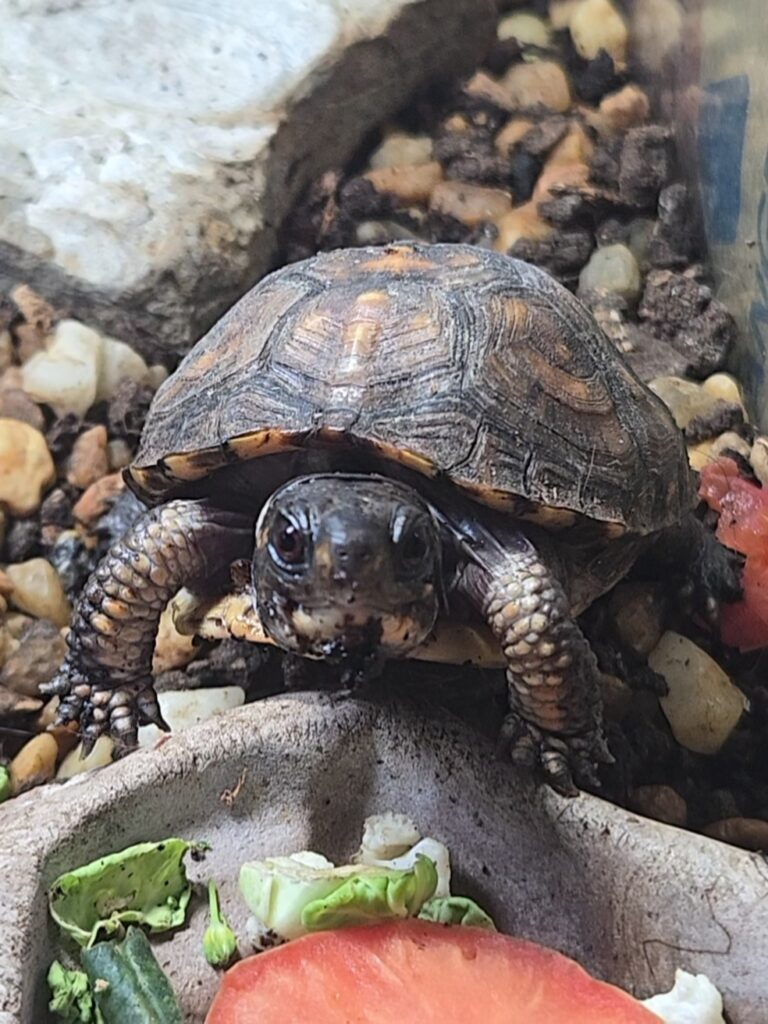
Our Eastern box turtle came to us from a park ranger late one October. Someone had walked up and handed the hatchling to him saying they found it crawling out of their mulch pile. The ranger failed to get a location where she came from, so we were unable to release her in the spring. She got her name because she was the size of a 2 Pence coin when she arrived, and has become quite the princess as our ambassador.

Bowie – Virginia Opossum

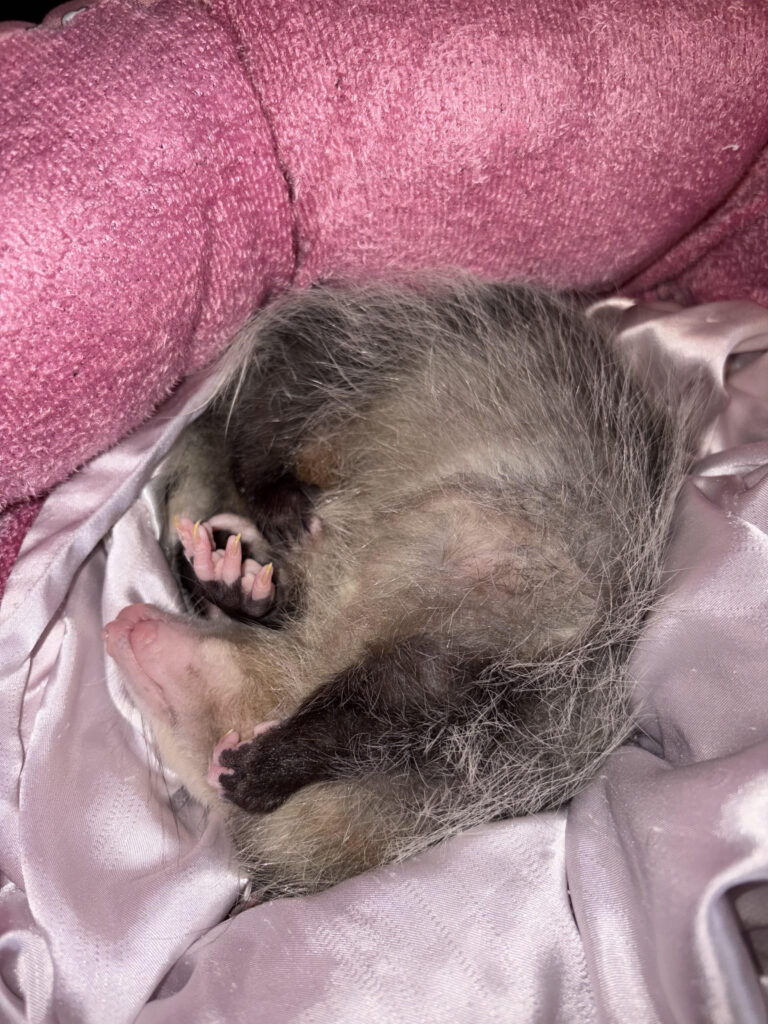
Bowie came to us in June 2026 and at the time she arrived she was only 11 grams. Most of her siblings didn’t survive (just too small) but she did well. Eventually the rehabilitator noticed that she had trouble walking and determined that she had developed metabolic bone disease despite being on a very strict diet. Due to this she cannot be released. She is the sweetest little princess and spends most of her day relaxing, eating her specialized diet and pooping enough to shock an elephant.

Great Horned Owl

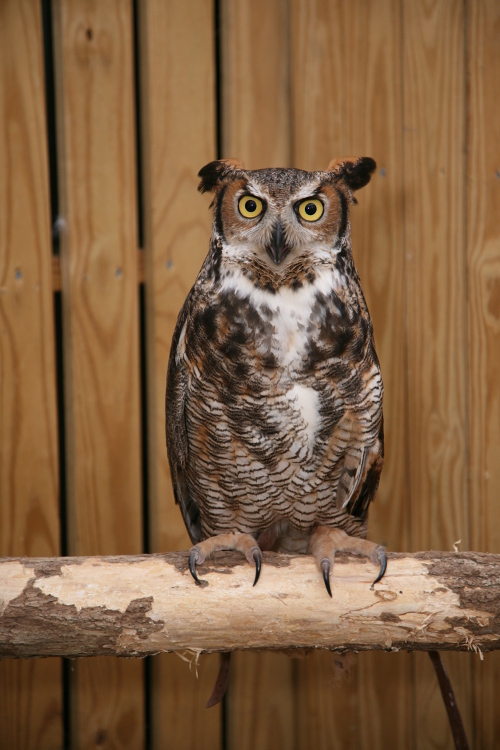
The WRI Great Horned Owl is a female that was hit by a car. She had a broken wing that did not heal properly. She can’t be released because she can’t fly and can’t catch her own food. She is our most requested visitor at educational events. She eats up to five mice a day. Owls eat their prey whole and later spit out a pellet of hair and bones.

Lance – Virginia Opossum

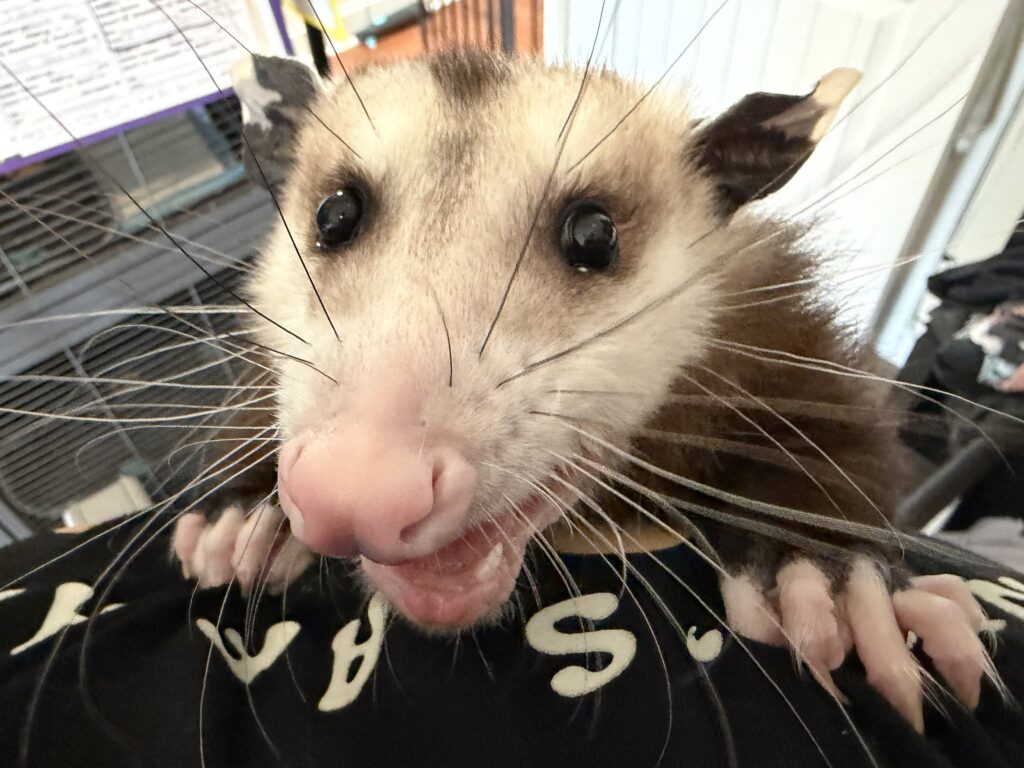
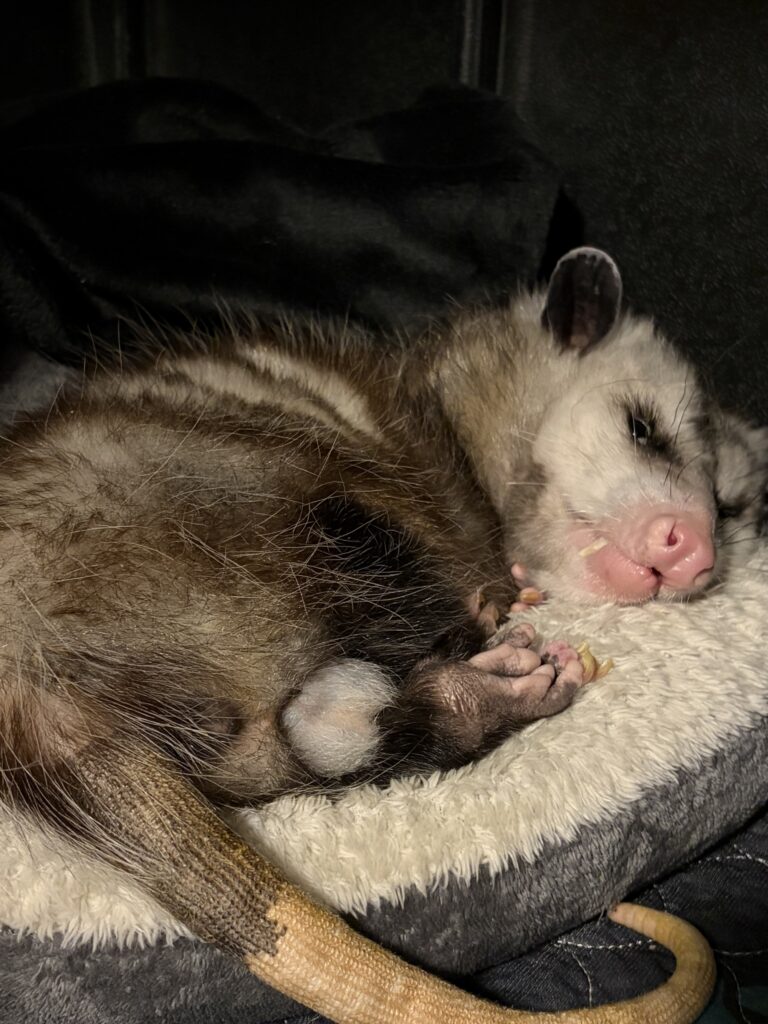
Lance came into rehab in April of 2026. He and his siblings were all 18 grams and under at intake. Most of his siblings did very well and were able to be released but Lance was different. Somehow, he developed metabolic bone disease. Not exactly sure how it came about, but because of it, he cannot be released. He has a very dark coat and is extremely talkative. He’s a sweetheart but very noisy for an opossum

Jabber– Virginia Opossum

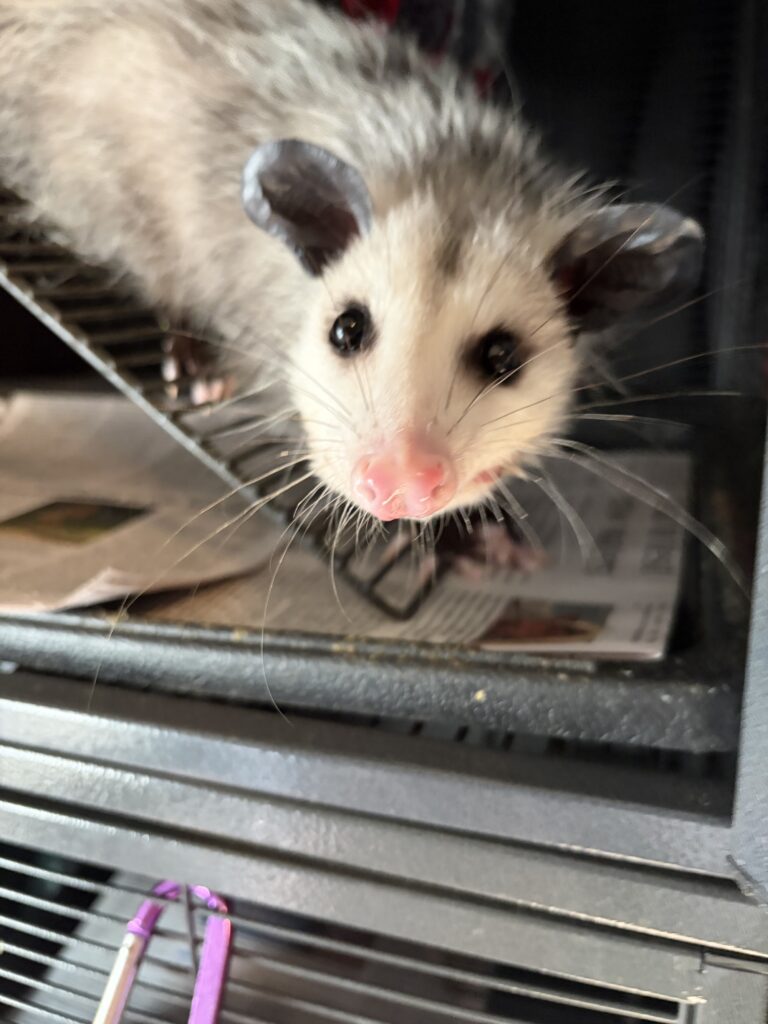
Jabber came to me into rehab at the end of July of 2026. She had been found and taken to another rehabber. She had a broken jaw and had many of the same issues that Jaws had so she was transferred to our rehabilitator that already had Jaws. She was set to take her in a few weeks, but she came to her earlier than expected because she developed flesh-eating bacteria. Due to the bacteria Jabber’s front right arm and wrist were damaged. On top of that she was suffering from the effects of metabolic bone disease (MBD) as well. After some medications and switching her diet, she’s done well. She can get around like normal and is just the sweetest little girl. But due to the damage to her wrist, jaw and previous MBD she cannot be released.

Jaws– Virginia Opossum

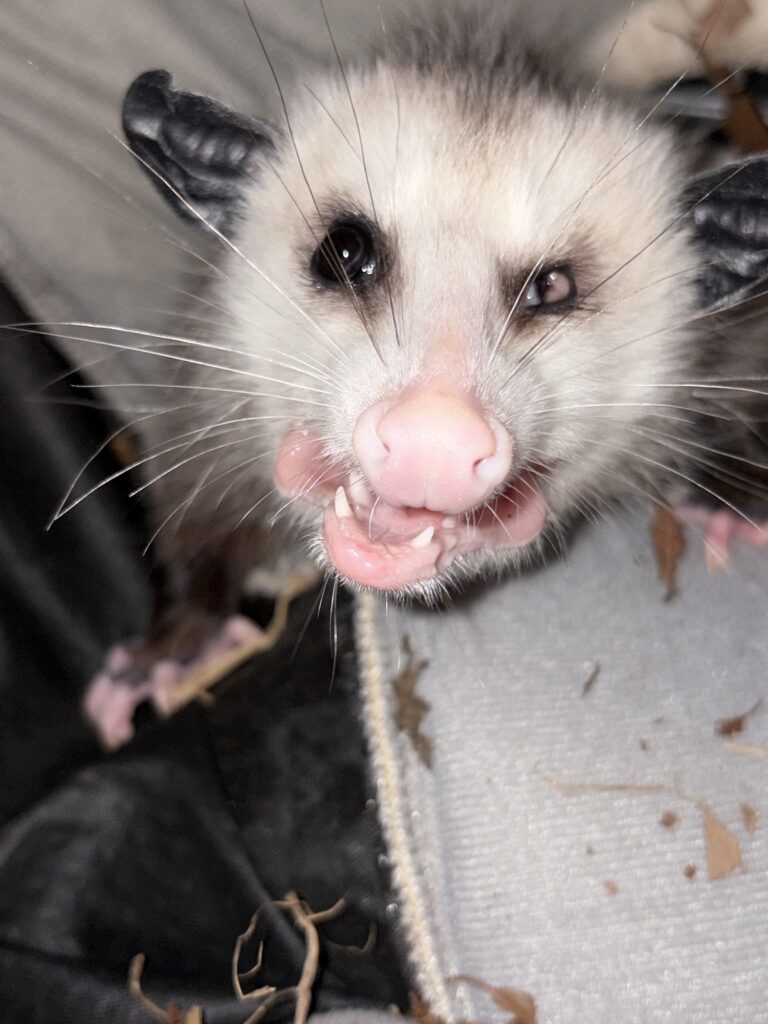
Jaws came into rehab in May of 2026. Jaws and her siblings were found on a mother who had been hit by a car. All of her siblings died due to being in bad shape. When she came in, we didn’t expect her to make it through the night. Her jaw looked to be broken, and her mouth was full of blood. She was only 20 grams at the time she arrived. As time went on and she grew, the rehabilitator noticed that not only was her jaw crooked, but she was also missing all the teeth on her left side, and her left eye was damaged beyond repair. Due to this, she cannot be released. She has a lot of attitude but can be extremely sweet at times.

Legolas - Virginia Opossum

Legolas was found in the beginning of May in 2025. He and his siblings were found scattered around in the finder’s backyard with no mother in sight. All the babies were about 20 grams when they were brought in. Legolas’ front right arm was hanging on by a thread and within 24 hours it fell off. We had no idea what attacked him, but we didn’t expect him to survive. His siblings passed, but he kept going. He’s thrived and is a giant sweetheart. He has a hard time getting around since he’s missing his front leg, which is the number one reason he cannot be released, but he has a wheelchair and lots of love.
Raccoon

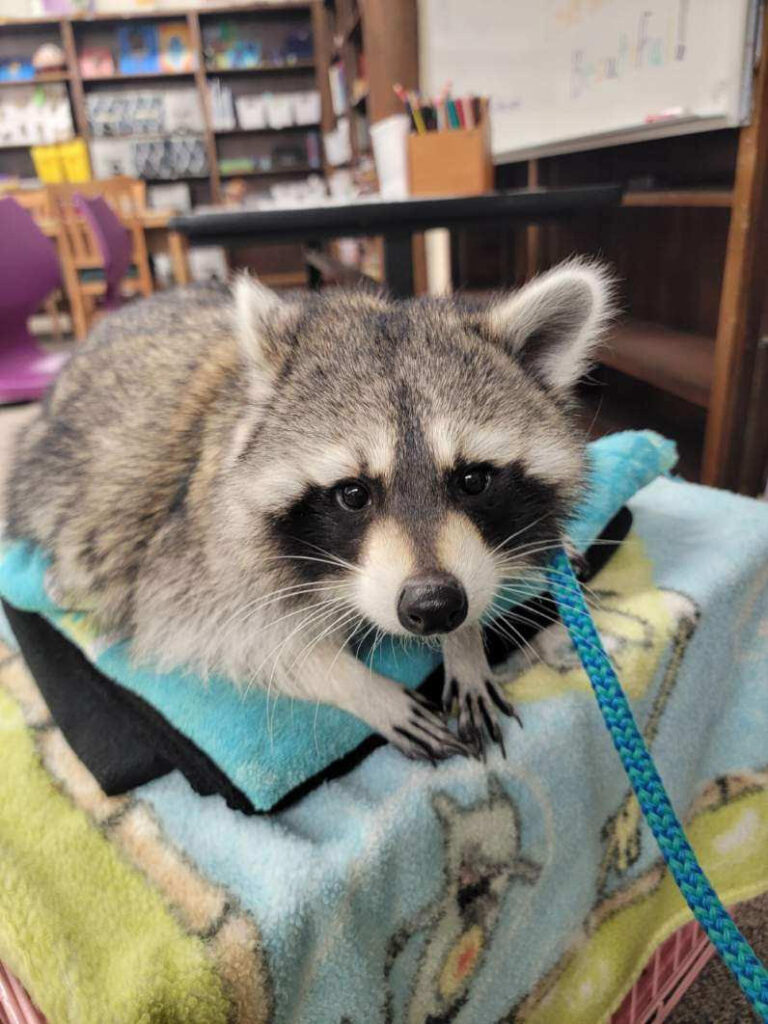
Brain and his sister (yes Pinky) were found in Norfolk hiding in planters. A kind police officer brought them to one of our rehabilitators, but it was noted that Brain would not be able to be released due to having Cerebellar Hypoplasia (CH) (Wobbly Cat Syndrome). After we were able to get his sister in with some new adoptive siblings to be released with, the law required that we euthanize him because he could not be. Due to the nature of CH he was so sweet we applied for a permit to keep him as an ambassador. He loves doing events especially at school libraries.

Eastern Gray Squirrel

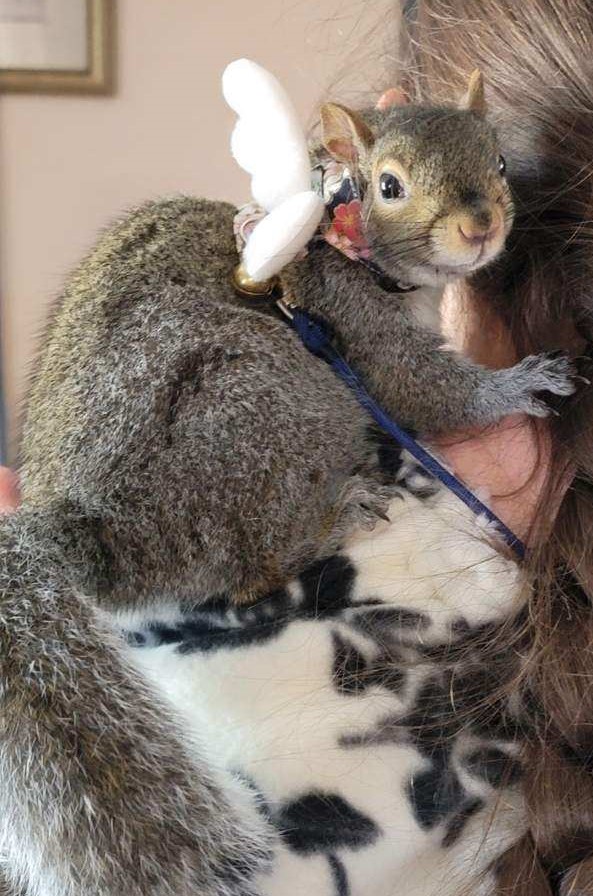
Kevin came to us as the only one of three babies that survived their home being destroyed due to tree trimming. The finder had tried to take care of them but soon sought help after losing two. Kevin arrived with an upper respiratory infection that caused him to have seizures. He became imprinted and due to the seizures, he has been made a great ambassador for WRI.